Audiobook life
10 Audiobooks That Helped Change the Industry
Long before smartphones and wireless earbuds, people were listening to books on records. Audiobooks have come a long way since then, and a handful of recordings helped push them along.
These aren’t necessarily the best audiobooks ever made. They’re the ones that changed what audiobooks could be, who listened to them and how they were made.
By Peter Clemens · November 2026
Some links are affiliate links. I may earn a commission at no cost to you. How I make money.
Typhoon
by Joseph Conrad
Where it all began: accessibility
Recorded books started as a way to give people who had lost their sight access to literature. In the US, Congress funded the Library of Congress’s first talking books in 1934. In Britain, the National Institute for the Blind (now the RNIB) launched its Talking Book service in 1935, largely for First World War veterans who had lost their sight.
Joseph Conrad’s Typhoon, recorded on a set of long-playing shellac records, was among its very first titles and is often described as the first full-length audiobook. It was thought lost for decades until a Canadian record collector got in touch with historian Matthew Rubery, who identified it in 2016.
It’s a good reminder that a format we now think of as a convenience began as a way of opening books up to everyone.

A Child’s Christmas in Wales
by Dylan Thomas, read by the author
The birth of the commercial audiobook
In 1952, two young women, Barbara Holdridge and Marianne Mantell, persuaded Dylan Thomas to record some of his work. The record, with A Child’s Christmas in Wales on one side and five poems on the other, was the first release from their new company, Caedmon Records.
It went on to sell more than 400,000 copies. In 2008 the Library of Congress added it to the National Recording Registry, noting that it is “credited with launching the audiobook industry in the United States.” Thomas’s own reading is still available today.
Listen on AudiblePaper Lion
by George Plimpton
Audiobooks hit the road
Duvall Hecht, an Orange County commuter, spent two hours a day at the wheel and wanted a better use for the time. In 1975 he helped found Books on Tape, a mail-order service that rented unabridged books on cassette.
Its first title was Paper Lion, Plimpton’s account of training with the Detroit Lions, on ten one-hour cassettes. By the early 1980s the company offered around 500 titles, and commuters had become one of the audiobook’s most important audiences. They still are.

The Sea Wolf
by Jack London, read by Frank Muller
The narrator becomes the star
When Henry Trentman founded Recorded Books in 1979, he hired a young actor named Frank Muller to record the company’s first book, Jack London’s The Sea Wolf.
Muller became the voice of choice for Stephen King, John le Carré, John Grisham and Elmore Leonard, and Library Journal called him “the first true superstar reader” of spoken word audio. Today plenty of listeners choose books by narrator, and Muller is a big part of why. His reading of Stephen King’s The Green Mile is a very good place to start.
Listen on Audible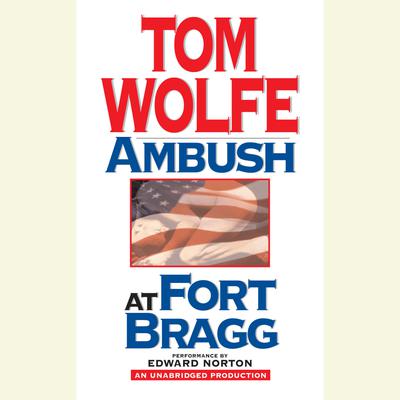
Ambush at Fort Bragg
by Tom Wolfe, read by Edward Norton
Audio first, print never
Tom Wolfe’s first new fiction in a decade didn’t come out as a book. In 1997 his publisher released Ambush at Fort Bragg only as an audiobook, read by a young Edward Norton. The novella had run in Rolling Stone, but it wasn’t available in any book format.
Salon called it “the first novella-length work by a major author ever to be published exclusively on audio.” A decade before Audible began commissioning its own audio-first fiction, it showed a major author would publish in audio first.
Listen on Audible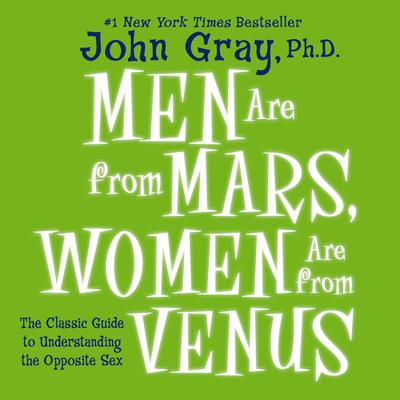
Men Are from Mars, Women Are from Venus
by John Gray, read by the author
The download era begins
The book itself isn’t the point here. In 1997 Audible launched its online store and the Audible MobilePlayer, the first commercially available portable digital audio player. It held about two hours of audio. Men Are from Mars, Women Are from Venus was the first audiobook downloaded.
No more boxes of cassettes or stacks of CDs. By 2009, digital downloads had overtaken CDs as the most popular audiobook format, and the phone in your pocket is a direct descendant of that first player.
Listen on Audible
Harry Potter and the Sorcerer’s Stone
by J.K. Rowling, read by Jim Dale (US) and Stephen Fry (UK)
Taking audiobooks mainstream
The Harry Potter audiobooks first appeared in 1999, read by Stephen Fry in the UK and Jim Dale in North America, and they introduced a whole generation of kids and parents to long, unabridged audiobooks.
Each release became an event. In 2007, Harry Potter and the Deathly Hallows became the fastest-selling audiobook in history, with an estimated 225,000 copies sold in its first weekend. If you’re choosing a version, see my comparison of Jim Dale, Stephen Fry and the full cast.
Listen on Audible
The Martian
by Andy Weir, read by R.C. Bray
An audiobook helps make a bestseller
Before The Martian was a bestseller and a Matt Damon film, Andy Weir had published it himself online. Toronto-based Podium Publishing struck its audiobook deal about 11 months before Crown’s print edition, and R.C. Bray’s narration became a hit, winning the 2015 Audie Award for Science Fiction.
It showed that an audiobook didn’t have to follow print success. It could help create it. One catch: Bray’s original recording is no longer sold on Audible. Today’s edition is a 2019 recording by Wil Wheaton, which adds some bonus material.
Listen on Audible
Matt Dinniman began publishing Dungeon Crawler Carl on the web fiction site Royal Road in 2020 and self-published the first book that October. The audiobooks, narrated by Jeff Hays and produced through his company Soundbooth Theater, are what turned it into a phenomenon and brought LitRPG to a much wider audience.
In 2024, Penguin Random House’s Ace imprint picked up the print rights while Dinniman kept his ebook rights. The Audible editions have since passed 140 million listening hours, and Hays will voice Princess Donut in the TV adaptation. Like The Martian, it shows audio can carry an independent author all the way to the mainstream.
Listen on Audible
Harry Potter: The Full-Cast Audio Editions
by J.K. Rowling, narrated by Cush Jumbo with a full cast
The blockbuster audiobook
More than 25 years after Dale and Fry, Audible and Pottermore remade all seven books with more than 200 actors, led by Hugh Laurie as Dumbledore, an original score and sound design in Dolby Atmos. The books were released monthly from November 2025 to May 2026, after more than 2,000 hours of recording.
It’s too early to know its lasting influence. But the same books that helped make audiobooks mainstream in 1999 are now getting a production on a scale usually associated with film and television.
Listen on AudibleWhat’s next for audiobooks?
In less than a century, audiobooks have gone from records made for blind veterans to an industry producing full-cast productions with hundreds of actors.
The next turning point may already be under way. In May 2025, Audible began offering AI narration to publishers, a few months after Spotify partnered with AI voice company ElevenLabs. AI narration could bring huge numbers of books to audio that would never have justified the cost of a human narrator. It also puts pressure on the narrators who made many of the recordings on this list. How listeners respond is the biggest open question in audiobooks right now.
I started listening in 2008, about a decade into the download era. A lot has changed since then, but some of the best audiobooks are still one great narrator and a microphone, the same setup Dylan Thomas sat down in front of in 1952. The technology keeps changing. A great story told well doesn’t.
The narrators, productions and genres behind these milestones.
Best audiobook narrators →Best Audible Originals →
Best full-cast audiobooks →
Sources
- Queen Mary University of London: academic unearths Britain’s first audiobook (2016)
- Library of Congress NLS: history of the talking book program
- Library of Congress: A Child’s Christmas in Wales, National Recording Registry
- Smithsonian: the Christmas tale that launched the audiobook
- TIME: on the road with Churchill, the Bard and Plimpton
- Audible Narrator Hall of Fame: Frank Muller
- Salon: Tom Wolfe’s audio-only Ambush at Fort Bragg (1997)
- Audible: company history
- Audio Publishers Association: a history of audiobooks
- Publishers Weekly: Harry’s last hurrah (Deathly Hallows sales)
- Publishers Weekly: The Martian’s chronicle (2015)
- PR Newswire: The Martian wins Audie Award for Science Fiction (2015)
- Seattle Met: Matt Dinniman and Dungeon Crawler Carl
- Dread Central: Jeff Hays cast as Princess Donut (2026)
- Audible: Harry Potter full-cast announcements
- Publishers Weekly: Audible expands catalog with AI narration and translation services (2025)
- TechCrunch: Audible is expanding its AI-narrated audiobook library (2025)
 Harry Potter AudiobooksJim Dale vs Stephen Fry vs Full Cast
 The Best Audiobook Narrators, Male and FemaleThe Voices Worth Following on Audible
 Best Audible OriginalsStar-Studded, Full-Cast and Only on Audible
 Best LitRPG Audiobooks to Level Up Your ListeningGame-Style Fantasy With Levels and Loot
 The Best Malcolm Gladwell Audiobooks, Ranked
 The 100 Best Audiobooks of All TimeThe Essential Listening List
Never run out of audiobooks to listen to
One email a week: the best current audiobook deals and one editor’s pick.
